We Are Already Thinking Together
by Bridget Nicholls, Producer / Creator
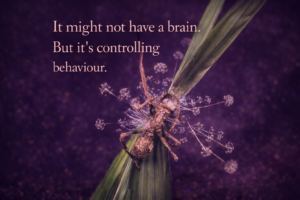
Much of how we imagine intelligence is shaped by a simple idea: that thinking happens inside individual minds. That agency lives in brains. That intention begins and ends with us.
But what if that picture is incomplete?
Across biology, ecology, and chemistry, we see systems where behaviour emerges without anything that looks like a central command. No single brain. No master controller. Instead, action arises through relationships — between organisms, environments, signals, rhythms, and constraints. Coordination without a conductor.
We have much to learn from this way of seeing.
It unsettles the idea that intelligence must be housed in a single place, or owned by a single being. At the same time, it opens something gentler. Perhaps this isn’t a diminishing of what it means to be human, but a quiet re-humanising — a relief from the burden of imagining ourselves as isolated units, endlessly self-directing and alone.
Lately, we’ve been thinking about how to go further with this — not just as a scientific concept, but as a way of understanding our relationship to the planet. To the systems that sustain us. To the small, often overlooked organisms and processes that quite literally run the world.
The truth is, we are already connected. Through air, soil, microbes, chemistry, and shared rhythms. Through food systems, climate systems, nervous systems. The separation we feel may be less a biological reality than a cultural forgetting.
In this sense, the work ahead is not about inventing new connections, but about reawakening old knowledge. Remembering that thinking, acting, and becoming have never been solitary affairs. That agency is something we participate in, not something we possess.
What emerges when we take that seriously is not a loss of self — but a different kind of responsibility. And perhaps, unexpectedly, a different kind of care.
We are not starting from zero. We are remembering how to listen.